Fire safety is key in any building, keeping people safe in emergencies. Knowing the fire safety rules for plumbing is vital. It helps prevent, detect, and control fires.
Good plumbing safety rules include setting up fire sprinklers and standpipes. These systems are essential for fighting fires. By adding these, you make your building safer and follow important laws like the Building Fire Safety Act and the Fire Safety Act.
Key Takeaways
- Navigating through fire safety regulations is key for following rules and keeping people safe.
- Good plumbing safety rules include installing fire suppression systems.
- The Building Fire Safety Act will start fully in October 2024 for most buildings.
- Rules like Approved Document B require fire stopping in all buildings.
- Getting experts to do the job ensures you follow rules and improve safety.
- It’s important to keep up with new fire safety rules to keep standards high.
- Training and staying updated are key to following changing fire regulations.
Importance of Fire Safety in Plumbing Installations
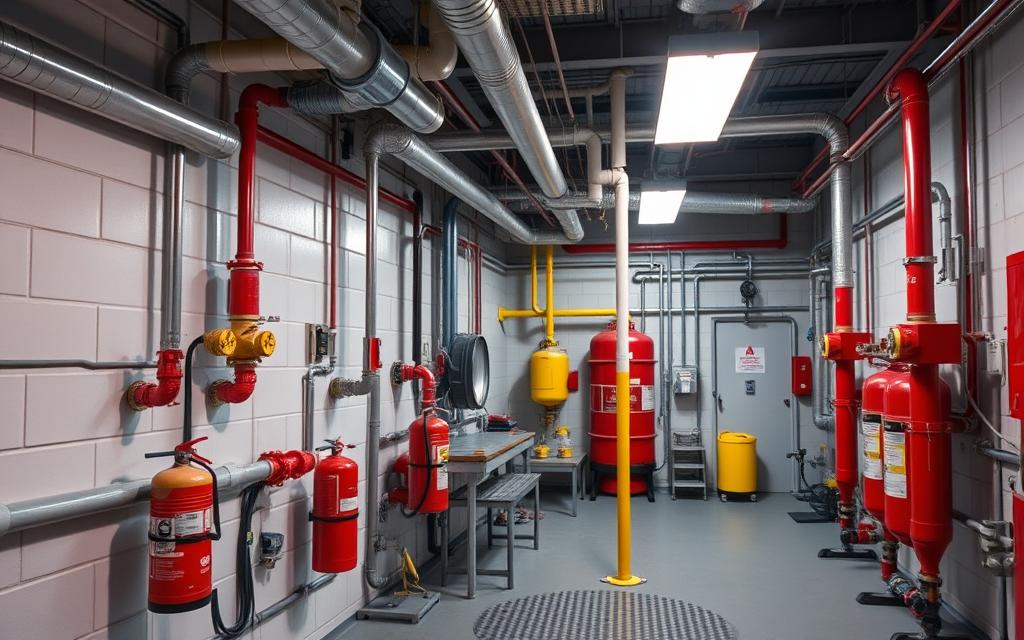
Fire safety in plumbing is key to protecting lives and property. With the right plumbing safety guidelines, systems work well in fire emergencies. It’s vital to have thorough safety measures in plumbing installations.
Why Fire Safety Matters
Fire safety in plumbing is critical because plumbing systems help fight fires. They supply water to sprinklers and hydrants, which are vital for controlling fires. Good safety measures ensure these systems work well, putting out fires and reducing damage.

Without proper installation and upkeep, the risk of failure in emergencies grows. This shows why following fire safety rules is so important.
Consequences of Neglecting Fire Safety
Ignoring fire safety in plumbing can have serious effects. It can cause severe damage, injuries, or even death. Companies might also face legal issues for not meeting safety standards.
Badly kept plumbing systems can lead to poor water flow or pressure. This makes fire suppression efforts fail. It’s essential to regularly check and maintain these systems to avoid dangerous situations.
Key Fire Safety Regulations in the UK
In the UK, keeping plumbing installations safe from fire is a big deal. There are many rules to follow to make sure everything is safe. Knowing these rules is key for anyone working on plumbing systems.
Understanding these laws helps everyone stay safe. It gives peace of mind and ensures safety for all.
Overview of Relevant Legislation
The UK has set up important laws for fire safety in buildings. The Regulatory Reform (Fire Safety) Order 2005 says non-domestic places and shared areas in homes must follow certain rules. It also means having someone in charge of fire safety, like a fire safety officer.
This person must do fire risk checks regularly. The Building Safety Act 2022 has also been passed. It makes fire safety in tall buildings even stricter by setting up a new regulator and needing digital safety records.
Standard Compliance Requirements
To meet fire safety standards, there are several things to do. Dry risers are needed for buildings between 18m and 60m tall. They must follow specific rules.
- External inlets must be within 18m of the street for fire trucks to reach.
- Pipes need to be 100mm or 150mm in diameter, depending on the building’s height and number of outlets.
- Outlets should be 750mm off the ground and have one or two hose connections.
- It’s important to check pipes every six months and do a full check once a year.
- Every year, the system must be tested by pressurising it to 150 PSI or 10 Bar.
Fire exit rules also need to be followed. Buildings need enough exits for the number of people inside. Fire exit doors must be easy to open and clear of any blockages.
Training staff and doing regular drills is also important. It makes sure everyone knows how to get out safely.
Fire Risk Assessment for Plumbing Systems

Ensuring plumbing systems are safe is vital. Fire risk assessments are key to spotting dangers. They help find weak spots in plumbing, like bad fire stopping and missing firefighting gear.
Identifying Possible Hazards
First, we look for hazards in plumbing. Risks come from heating and hot water services. Chemical and biological dangers can also happen. Plus, physical risks like slips and falls are important to avoid.
Some major hazards include:
- Heating systems causing flare-ups
- Electrical malfunctions leading to fire outbreaks
- Inadequate access to essential fire safety equipment
Evaluating Risk Levels
After finding hazards, we check how big a risk they are. This helps decide how much safety we need. We sort risks by how bad they are and how likely they are to happen.
By doing this, we can make plumbing safer. Some things to think about when checking risks include:
| Risk Type | Severity | Likelihood | Recommended Action |
|---|---|---|---|
| Heating Systems | High | Medium | Regular inspections |
| Chemical Exposure | Medium | Low | Personal protective equipment (PPE) |
| Access to Fire Equipment | High | High | Clear pathways and signage |
Doing regular checks keeps safety up to date. This keeps everyone safe and follows the rules.
Installation Techniques to Enhance Fire Safety
Using the right installation techniques is key to keeping plumbing systems safe from fire. Fire-resistant materials and correct pipe routing help stop fires from spreading. Knowing these methods is important for keeping everyone safe.
Use of Fire-Resistant Materials
Choosing the right materials is vital for fire safety in plumbing. Fire-resistant materials, like sealants and intumescent compounds, protect against heat. They expand to block fire and smoke from moving through pipes.
It’s also important to follow the Water Regulations. This ensures all materials used are approved, stopping waste and contamination.
Proper Pipe Routing and Protection
Correctly routing pipes is essential for fire safety. Poor connections can let flames and smoke spread quickly. Using colour coding, like green with red-green banding, helps identify fire supplies.
Following BS 1710 for water fittings, including cisterns and valves, is also important. It prevents contamination and boosts fire prevention in plumbing.
| Type of Material | Fire Resistance | Compliance Requirements |
|---|---|---|
| Intumescent Sealants | Expands when heated | WRAS approved |
| Pipe Insulation | Low fire spread | BS 1710 compliant |
| Fire Doors with Intumescent Seals | Slows fire spread | Insured by required standards |
Role of Qualified Professionals in Compliance
Keeping up with fire safety in plumbing needs a big commitment to the best ways of doing things. It’s key to work with experts to keep plumbing safe and sound. Certified plumbers know how to deal with tough rules, making sure everything is up to standard.
Importance of Hiring Certified Plumbers
Choosing certified plumbers means your plumbing is done right. They know all about fire safety rules, so they can take the right steps. Their skills make your place safer and more valuable, keeping everyone safe from fire risks.
Benefits of Professional Inspections
Getting regular checks from experts is super helpful. They spot problems in plumbing that could be dangerous. For example, fire doors need checks every six months to make sure they’re safe.
Also, emergency lights must be tested right, following strict rules. Working with pros for these tasks means your place is safe, protecting lives and property.
Keeping Up-to-Date with Fire Safety Regulations
It’s vital to keep up with fire safety rules if you work on plumbing. The rules change often, so it’s key to stay informed. This ensures you follow the law and keep everyone safe.
Learning new things is important for your job. It helps you keep up with the latest rules. This way, you can do your job better and safer.
Importance of Ongoing Education
Learning more helps you know the latest fire safety regulations for plumbing installations. You can find out about new rules through books, workshops, and courses. This knowledge helps you stay safe and follow the law.
Knowing a lot about fire safety means you can handle risks better. For example, you’ll make sure fire alarms work right, as the British Standard BS 5839-1:2017 says.
Resources for Staying Informed
Using fire safety resources helps you follow the rules and do your best work. Sign up for newsletters, join groups, and go to training. This way, you’ll not only follow the law but also help make your workplace safer.
FAQ
What are the key fire safety regulations for plumbing installations?
The Building Fire Safety Act and the Fire Safety Act are key. They require fire suppression systems like sprinklers and standpipes. This ensures safety and compliance.
Why is fire safety essential in plumbing systems?
Fire safety is vital because bad measures can cause big problems. These include damage and loss of life. Good safety guidelines help keep systems working well in emergencies.
How can I assess fire risks in my plumbing system?
Start by checking your plumbing for hazards like bad fire stopping and access to firefighting gear. Knowing the fire risk levels helps you plan better.
What installation techniques enhance fire safety in plumbing?
Using fire-resistant materials and proper pipe routing are key. These steps help stop fires and smoke from spreading. They make your plumbing safer.
Why is it important to hire qualified professionals for plumbing installations?
Qualified plumbers ensure your work meets fire safety rules. They know the standards and can spot safety issues. This keeps everyone safe.
How can I stay updated on fire safety regulations for plumbing?
Keep learning through publications, workshops, and courses. These help you stay up-to-date and follow the best fire prevention practices.


